
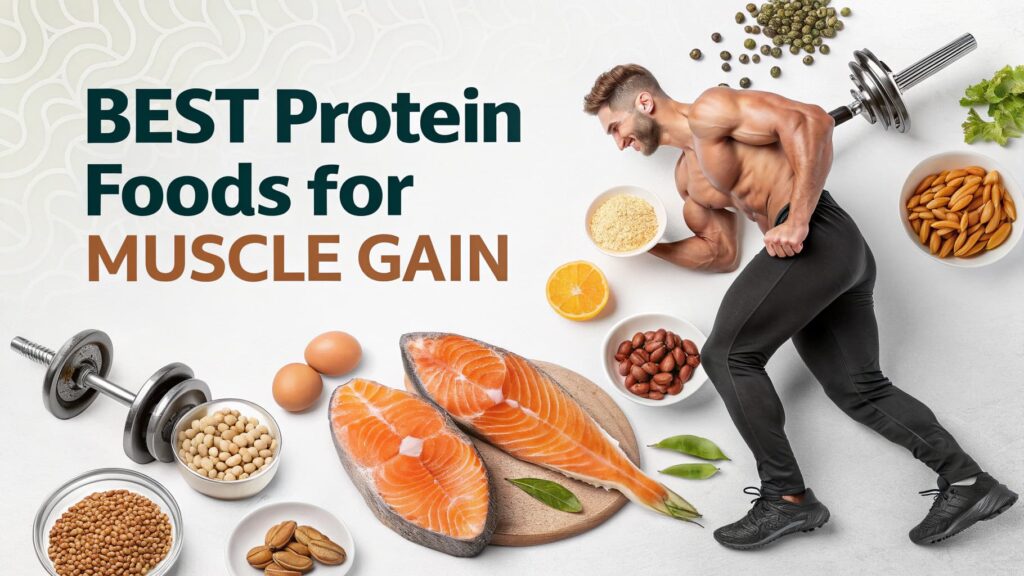

Lifting big weights in the gym isn’t the only way to gain muscle; diet plays a major role. Protein is essential for muscle growth, repair, and recuperation. Eating the proper quantity of high-quality protein foods is crucial if you want to gain muscle. The top protein foods for building muscle, their benefits, and easy ways to incorporate them into your daily diet will all be covered in this blog.
Visite: Gym Diet Guide for Beginners
Table of Contents
ToggleWhy Protein Is Important for Muscle Gain
Protein is made up of amino acids, which are the building blocks of muscles. During workouts, your muscle fibers break down. Protein helps repair these fibers and makes them stronger and bigger. Without enough protein, muscle growth slows down, recovery becomes poor, and fatigue increases.
For muscle gain, most fitness experts recommend 1.6 to 2.2 grams of protein per kilogram of body weight per day, depending on your workout intensity and body goals.
Top Protein Foods for Muscle Gain
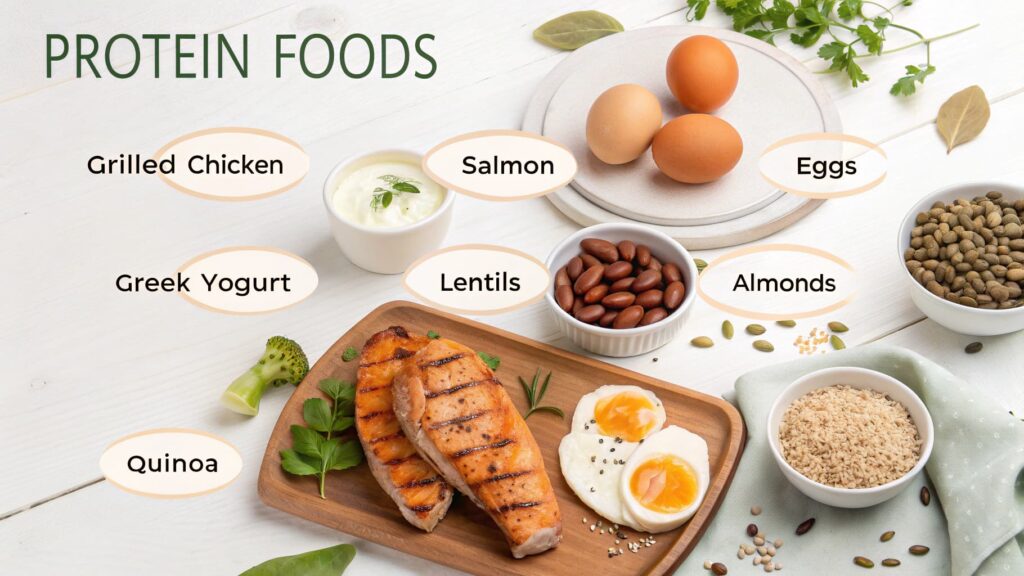
1. Eggs – Complete and Affordable Protein
Eggs are one of the best natural protein sources for muscle gain. They contain all nine essential amino acids, making them a complete protein.
Protein content:
1 whole egg contains around 6–7 grams of protein.
Benefits:
Helps muscle recovery
Rich in healthy fats and vitamins
Easy to cook and budget-friendly
You can eat boiled eggs, omelets, or egg bhurji as part of your breakfast or post-workout meal.
2. Chicken Breast – Lean Protein King
Chicken breast is extremely popular among gym-goers because it is high in protein and low in fat.
Protein content:
100 grams of chicken breast provides about 31 grams of protein.
Benefits:
Promotes lean muscle growth
Low in calories
Easy to digest
Grilled, boiled, or stir-fried chicken breast is perfect for lunch or dinner.
3. Paneer – Best Vegetarian Protein Option
Paneer (cottage cheese) is an excellent protein source for vegetarians. It contains casein protein, which digests slowly and supports muscle recovery for a longer time.
Protein content:
100 grams of paneer contains 18–20 grams of protein.
Benefits:
Ideal for muscle repair
Keeps you full for longer
Great for night-time meals
Paneer bhurji, grilled paneer, or paneer salad are healthy choices.
4. Greek Yogurt – High Protein & Probiotics
Greek yogurt is thicker and higher in protein compared to regular curd.
Protein content:
1 cup of Greek yogurt contains 10–12 grams of protein.
Benefits:
Improves digestion
Helps muscle recovery
Contains calcium for bone strength
Consume it as a snack or add fruits and nuts for extra nutrition.
5. Fish – Protein with Healthy Fats
Fish like salmon, tuna, and rohu are rich in protein and omega-3 fatty acids.
Protein content:
100 grams of fish provides 20–25 grams of protein.
Benefits:
Reduces muscle inflammation
Supports heart health
Enhances muscle recovery
Including fish 2–3 times a week can significantly improve muscle growth.
6. Milk – Simple and Effective Protein Drink
Milk is a complete protein source and contains both whey and casein protein.
Protein content:
1 glass of milk contains around 8 grams of protein.
Benefits:
Supports muscle recovery
Strengthens bones
Easy to consume anytime
Drinking milk post-workout or before bed is a great habit.
7. Lentils & Dal – Plant-Based Protein Power
Lentils and dals are widely used in Indian diets and provide a good amount of plant-based protein.
Protein content:
1 cup of cooked dal contains 15–18 grams of protein.
Benefits:
Budget-friendly
Rich in fiber and minerals
Good for vegetarian muscle gain
Combine dals with rice or roti for a balanced meal.
8. Nuts & Seeds – Protein with Healthy Fats
Almonds, peanuts, chia seeds, and pumpkin seeds are good protein sources.
Protein content:
100 grams of almonds contain 21 grams of protein.
Benefits:
Provides energy
Improves hormone balance
Supports muscle recovery
Eat them in moderation as snacks or toppings.
9. Soy Products – Complete Plant Protein
Soybeans, tofu, and soy milk are excellent protein sources, especially for vegetarians.
Protein content:
100 grams of soybeans contain 36 grams of protein.
Benefits:
Supports muscle growth
Improves cholesterol levels
Cost-effective protein option
Tofu stir-fry or soy chunks curry works well for muscle gain diets.
10. Whey Protein Supplement
Whey protein is a fast-digesting protein supplement ideal for post-workout nutrition.
Protein content:
1 scoop provides 20–25 grams of protein.
Benefits:
Speeds up muscle recovery
Convenient and effective
Helps meet daily protein goals
Whey protein should support your diet, not replace whole foods.
How to Include Protein in Your Daily Diet
Start your day with protein-rich breakfast
Add protein in every meal
Consume protein after workout
Balance animal and plant protein sources
Drink enough water
Consistency in protein intake is key to muscle gain.
Common Protein Myths
Myth: More protein means faster muscle gain
Fact: Excess protein without training will turn into fat.Myth: Supplements are necessary
Fact: Whole foods are enough if planned properly.
Final Thoughts
Protein is the foundation of muscle growth. Choosing the right protein foods and consuming them consistently can help you build lean muscle, recover faster, and improve overall fitness. Whether you are a beginner or an experienced gym-goer, focusing on high-quality protein sources will bring noticeable results over time.
Stay disciplined, train smart, and eat right for long-term muscle gains.